Tuesday, 13 March 2012

Influences

What influences our culture?


Brain storm of things that influence -

weather/Natural disaster
Peer pressure
Education
Politics
law
Public Opinion
Travel
financial means
Other cultures
World events
Medicine
Technology
war
Society itself
Economics
Individual People
Media
Mainstream
Religeon
friends/Family

All the above change and influence culture at the same time.

The greatest influence has been in Technology (find example)

TV
Internet
Phone
Mobile technology
Written word (printing press)
Transport (Car/Rail/boats/air)
Domestic technology to streamline chores
freeze dried food
Space Travel
tinned food
Light bulbs
Metal/Ore extraction (mining)
Paper/fabric Production
Electro magnetic tape
Cinema/Animation
Camera
Pigment Dye
fibreoptics
Computers

all t he scientific/technological advances have changes the way we communicate - and have (as a result) change the way we make and display art to communicate with others.

Art in the age of mechanical reproduction (timeline)

cave Art - Language
Early civilisation - Pigment (writing)
Dark ages - Metal extration (gold leaf used in religeous images)
Renaisance - camera Lucida & perspective
Industrial age - Transport/power/Mass production - influenced the crafts movement
Electronic Age - Computers (Graphic Design)
Digital age - I nternet/Mobile phone (Mass image consumption/Flickr, YouTube &  Facebook)

The technology defined the era and defined the art that was produced by that society/community


Monday, 12 March 2012

Context - guidelines in photojournalism

Reuters Handbook of Journalism regarding guidelines on the use of Photoshop and guidelines on captions.

http://handbook.reuters.com/index.php/A_Brief_Guide_to_Standards,_Photoshop_and_Captions#Photo_Opportunities


Here is an excerpt about Photoshop guidelines:

Allowed:

Cropping
Adjustment of Levels to histogram limits
Minor colour correction
Sharpening at 300%, 0.3, 0
Careful use of lasso tool
Subtle use of burn tool
Adjustment of highlights and shadows
Eye dropper to check/set gray

Not Allowed:

Additions or deletions to image
Cloning & Healing tool (except dust)
Airbrush, brush, paint
Selective area sharpening
Excessive lightening/darkening
Excessive colour tone change
Auto levels
Blurring
Eraser tool
Quick Mask
In-camera sharpening
In-camera saturation styles


This illustrates just how important it is to get the shot right at point of capture.

Relevant


BBC News report


Metropolitan Police compensate parade-ban photographer

A teenager who was wrongly barred by police from taking photographs of a military parade in Romford, east London, has been compensated.
Lawyers acting for Jules Mattsson - then aged 15 - said a police inspector had described taking photographs in public as "anti-social behaviour".
Solicitor Chez Cotton said the police's treatment of Jules was "shocking".

Start Quote

The inspector's comments were designed to belittle [our client]”
Chez CottonSolicitor
A Metropolitan Police spokesman said an out-of-court settlement had been paid and an apology issued.
A spokesman for law firm Bindmans said Jules, who was targeted on 26 June, 2010, was taking photographs of the Armed Forces Day parade in Romford town centre.
"The inspector told [Jules] he was a public hazard and said that photographing in public was 'anti-social behaviour'," he said.
"He described the act of taking photographs as 'silly' and 'gay' and 'stupid'," said the spokesman.
"When [Jules] continued to state the lawfulness of his behaviour, the inspector declared it was 'dangerous' as he was 'likely to be trampled on by soldiers' from the parade."
Ms Cotton, head of the police misconduct department at the law firm, said: "The treatment of the police towards our client, a 15-year-old, was shocking. The inspector's comments were designed to belittle."
'No legal power'
The solicitor said Jules had "politely" maintained that the police were not entitled to interfere with his right to report, however in response, the inspector told him: "I consider you a threat under the Terrorism Act young man. I've had enough'."
"The police have no legal power or moral responsibility to prevent or restrict what journalists record," she added.
A Metropolitan Police spokesman said an out-of-court settlement had been reached with the force paying out compensation and legal fees.
The spokesman added an apology had been issued.
Effects Theory

Missed lecture - own research

Hegemony - Small groups of people exerting influence over much larger groups of people (not by force). The illusion of choice.

Hypodermic Model - people directly copy something which is seem (it gets injected into them as an appropriate way to behave)

An example of this that was used in discussion was the Tango ad, which evolved into 'happy slapping'

Inoculation Model - Not just one dose (view) will work, repeated exposure is need to embed the message firmly in the viewer.

Desensitisation?
Hidden Messages.

In order to fully understand these - here are some further links I have looked at.
http://people.bath.ac.uk/hssbpn/theories%20of%20media.htm
http://www.mtholyoke.edu/acad/intrel/milner.htm
http://www.theory.org.uk/ctr-eff.htm
http://www.investopedia.com/terms/h/hierarchy-of-effects-theory.asp#axzz1ovjw1S8P


"Purchasing choices are made out of a need, we need to replace need with desire'

'We live in a society that values & promotes individuality, yet demands conformity'


Question - Who are we & Are we free?

Are we free to produce ANY work we want?

No, laws are in place which we must adhere to in taking and displaying image.
If we exhibit internationally, we must adhere to other laws.
Internet - what impact does that have?
(Each site will have terms and conditions and laws in the publishing country which users must adhere to, but there may be cultural differences which affect the reception of ideas, images and aspirations)

There is no right to free speech
There are social norms which we feel obliged to conform to and gain approval and acceptance of our peers
Peer pressure to conform (or rebel)

Censorship

We are active participants in a capitalist society, ruled by the flow of money, we work and earn so we can buy, the way we work and the things we buy denote our position and 'place' in society.
Our aspirations within that society will be governed by our own ideology, which has formed over many years.
Made up of things we have inherited, things that are pressured or presumed and our own thoughts and ideas.

What are we - the British Culture?

When considering this question here is a visual representation including some of my own images


What makes & defines us;
multi cultural
socially responsible
geographical diversity

Binge drinkers
food lovers (consume & produce)
Tradition
Technically obsessed with progression
creatives
Money obsessed
inactive 'watchers'
concerned with face value/appearance
Lead by idea of celebrity.

As seen in previous lectures - the media reinforces social values and stereotypes (redundant messaging for us to accept the norm)


Representation

Mimesis - like holding up a mirror to something, any meaning would be inherent in t he object itself.
Is this true?
If so how can meaning change?

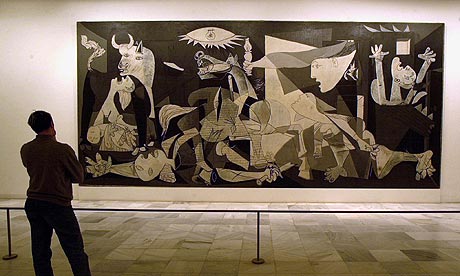
We, as a population are represented in the culture and society in which we live, we are depicted in representational productions that aim to show us and our surroundings. As we evolve, meanings can change, as we saw with the symbolism in Picasso's Guernica.

Social Construction - we as people construct and attach meaning to image and object.
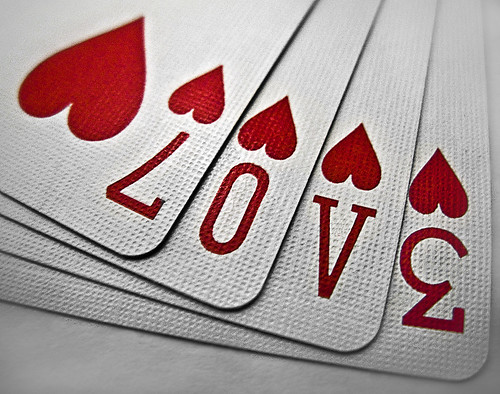
As evidenced is Valentines Goods
Red Roses
Red Hearts


Blood and Danger are also represented as Red.


The challenge for image makers & film makers is that if we are to clearly communicate a character (for an example a gay man) to our viewer, how do we do that without making him stereo typical/camp.
How do we make that character heard by an audience that may not agree with those sexual preferences - make him less manly? Less able to threaten a typical heterosexual man?


There is an ongoing battle between the stereo type and the suspension of disbelief, and as viewing figures (in TV terms) dictates wether a series has been a success, image makers are  torn between making the content they want, and the content which is watched and accepted by the wider majority.

How am I portrayed on TV?

Fiery red head (as described by others)!
I am a busy working mother.
At work I am a qualified professional in a male dominated industry - who has a senior management role.
I am self sufficient.
I am creative and am at University to expand my creative outlook.
I have friends ranging from 18 to 67.
I am from the North West.
I like make up & jewellery but also like driving cars - fast! And can strip down an engine.

Who re-inforces my own values and beliefs and reflects my norms?

Why do we accept the stereo types of different sections of the community when no-one represents ourselves (and I would be classed as a majority??)

Image makers can digress, women image makers often portray woman as strong or bold, maybe to counter act the glamour culture or 'women as object'.

Geographical Stereo types are often re-inforced, often for comedic value.


Jingoism

the extreme belief that your own country is always best, which is often shown in enthusiastic support for a war against another country
Patriotism can turn into jingoism and intolerance very quickly.
(Definition of jingoism noun from the Cambridge Advanced Learner's Dictionary & Thesaurus © Cambridge University Press)

If things are reported and written in a different way, it stands to reason that images are taken/displayed/constructed in a different way dependant on your view point and the message you wish to portray.


Jingoism is a form of expression or motif based on buzzwords. The word is derived from 'jingo', an expression used in a particularly banal form of patriotic song during the 19th century. Jingoistic songs and expressions persisted into the 20th century during the wars. Modern usage has expanded the meaning to refer to a form of acceptable platitude. This is seen as a shallow, trivial, insincere, or merely facile form of expression or behavior, political or ideological. The term is always negative, and dismissive of the content of the subject matter.


Examples of Jingoism:


The Horst Wessel
Battle Hymn of Lt. Calley
http://en.wikipedia.org/wiki/Jingoism

Image Example of Jingoism:

'Ten thousand miles from tip to tip', an 1898 political cartoon depicting the extension of the united states dominion.

American war-dog, a 1916 political cartoon by oscar cesare, with the dog named 'Jingo'.


The following terms have all been used by the British press to report on the war in the Persian Gulf:

They have


A war machine
Censorship
Propaganda

They


Destroy
Destroy
Attack
Kill
Kill
Cower in their foxholes

They launch


Sneak missile attacks
Without provocation

Their men are


Troops
Hordes

They are


Brainwashed
Paper tigers
Cowardly
Desperate
Cornered
Cannon fodder
Bastards of Baghdad
Blindly obedient
Mad dogs
Ruthless
Fanatical

Their boys are motivated by


Fear of Saddam

Their boys


Cower in concrete bunkers

We have


Army, Navy and Air Force
Reporting guidelines
Press briefings

We


Take out
Suppress
Eliminate
Neutralize
Decapitate
Dig in

We launch


First strikes
Pre-emptively

Our men are


Boys
Lads

Our boys are


Professional
Lionhearted
Cautious
Confident
Heroes
Dare devils
Young knights of the skies
Loyal
Desert rats
Resolute
Brave

Our boys are motivated by


Old-fashioned sense of duty

Our boys


Fly into the jaws of hell


Context - Picasso's Guernica


This piece of work can be viewed from several positions.
It is a historical piece of work, important by way of it's providence and who painted it, at a time when photography was available, it also said something about the craft and medium of painting. It used news print and was in black and white, like the photo journalism to signal the propaganda and media manipulation that was prevalent in the day (and still occurs today)

It can be viewed from a political standpoint, it's content is about the civil war from the position of the socialist party - against the cruel fascist regime.
In that context, it is socio-political, it is about the people of Spain.

The symbolic representation within the painting are perhaps lost on modern culture without further study, but the bull represents Spain, the painting also features the all seeing eye of God, and the broken sword signalling the fallen army.
The wailing mother weeps over her child as a literal translation of the pain and suffering endured by the people.

In my own work, I try and not take a very literal view of what I am depicting (unless it is specifically called for)
I try to create images that have meanings on multiple levels for different people. An image can appear sexual or enticing to one but the intention by the creator was something different.


Logical Fallacy
One must be wary of logic, as it can lead to us accepting or assuming things that are not true.

An example of this would be;

(1) All men are mortal.
(2) Socrates is a man.
Therefore:
(3) Socrates is mortal.
It is  not possible that both (1) and (2) are true and (3) is false, so this argument is deductively valid.

Whilst this may seem common sense, when considered in a modern day example of newspapers reporting youth crime;

The newspapers report many stories of crime and vandalism
They all feature today's unruly youth
therefore one could logically asume that all youth are involved in crime and vandalism (or are bad)

The newspaper has repeated its message or view in a redundant way and as a result has influenced the reader into thinking that that is the truth and the only variation of the truth.
This can also lead to people fearing the youth section of society and lead to issues - one recent example -